
Cyber War Escalation 2026: Global Systems Targeted Amid Israel-Iran Conflict
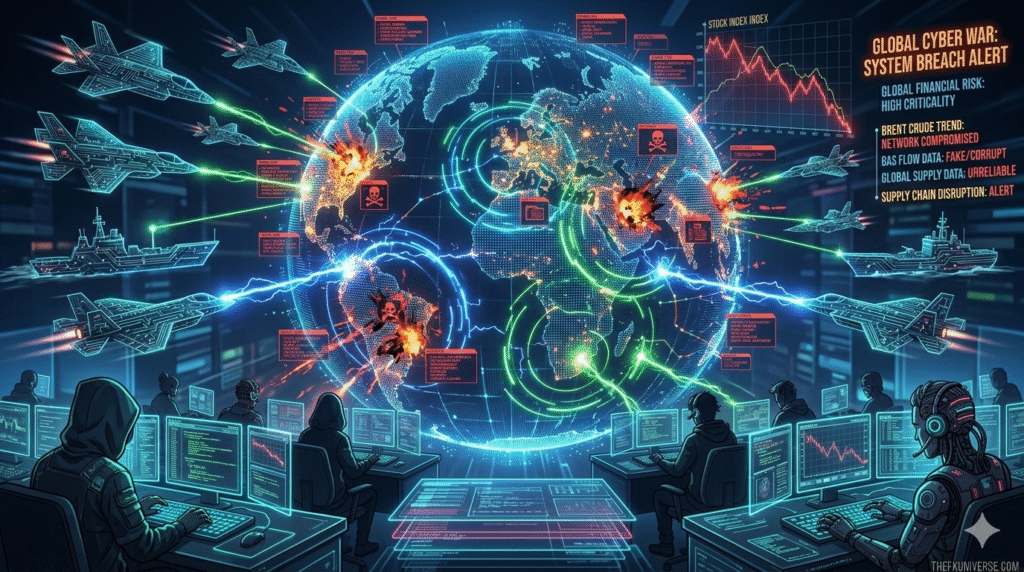
As geopolitical tensions between Israel and Iran continue to intensify, a new and less visible battlefield is rapidly emerging — cyberspace. Over the past 24 hours, cybersecurity agencies and global intelligence networks have reported a sharp rise in coordinated cyber attacks targeting critical infrastructure, financial institutions, and communication systems across multiple countries.
Experts believe that the current conflict is no longer limited to traditional warfare. Instead, it is evolving into a hybrid war, where digital attacks play a central role in disrupting economies and weakening national security without direct military confrontation.
Financial Systems Under Threat
Several international banks and payment networks have reported unusual activity, including temporary outages and attempted breaches. While most attacks have been contained, analysts warn that the scale and sophistication of these operations are increasing rapidly.
The primary concern is that a successful large-scale cyber attack could disrupt global financial systems, affecting millions of users and triggering panic in already volatile markets.
Critical Infrastructure Targeted
Energy grids, oil facilities, and transportation networks have also been identified as potential targets. Security experts suggest that attackers are attempting to exploit vulnerabilities in essential systems to create maximum disruption.
This raises serious concerns about the stability of global supply chains, especially at a time when energy markets are already under pressure due to geopolitical tensions.
Governments Respond with Urgency
Countries around the world are increasing their cybersecurity defenses and monitoring systems more closely. Emergency protocols are being activated to prevent potential large-scale disruptions.
Tech companies and cybersecurity firms are also working around the clock to identify threats and strengthen digital defenses.
A New Era of Warfare
The rise of cyber warfare marks a significant shift in how global conflicts are fought. Unlike traditional battles, cyber attacks can be launched instantly, across borders, and with far-reaching consequences.
As tensions continue to rise, the risk of a major cyber incident remains high. The coming days could be crucial in determining whether the digital battlefield becomes the next major front in the ongoing global conflict.
About the Author