

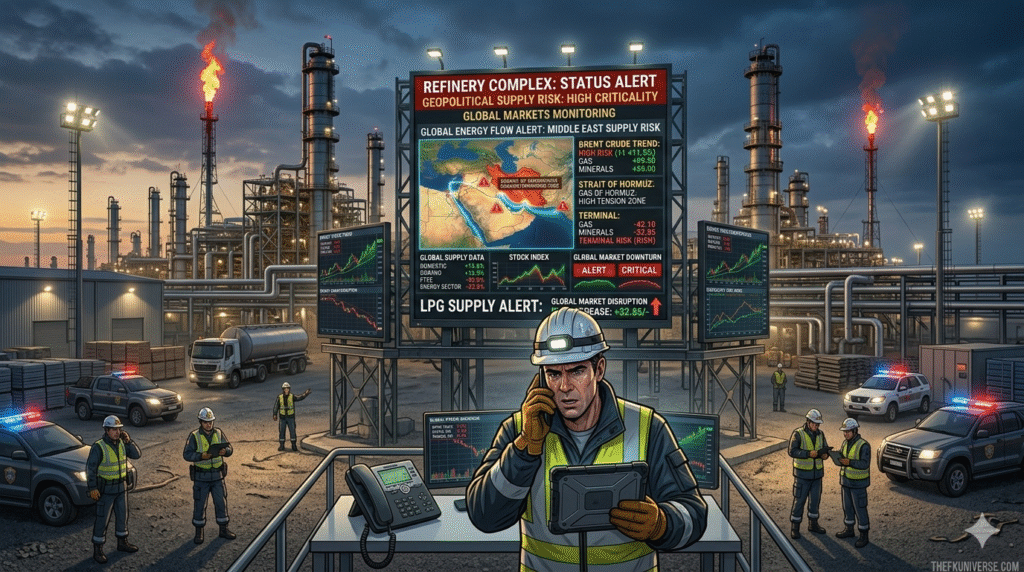
Energy Infrastructure Risks Rise as Middle East Conflict Threatens Refinery Operations
Global energy markets are facing renewed uncertainty as escalating tensions in the Middle East raise concerns over the safety of key oil refinery operations. With the ongoing confrontation involving Iran, Israel, and allied forces, attention is shifting toward critical infrastructure that underpins global fuel supply.
According to multiple international monitoring sources, several strategic energy facilities across the region have entered high-alert status. While no confirmed large-scale refinery shutdown has been reported so far, analysts warn that the risk of disruption has increased significantly in recent days.
Refineries Under Heightened Security
Oil refineries in sensitive regions are implementing additional security measures as a precaution against potential attacks. Industry experts note that modern conflicts increasingly target infrastructure to create economic pressure rather than direct territorial control.
The possibility of drone or missile strikes on refining facilities remains a key concern, especially given recent patterns observed in regional conflicts.
Supply Chain Vulnerability
Refineries play a critical role in converting crude oil into usable fuels such as gasoline, diesel, and LPG. Any disruption at this stage of the supply chain could have a cascading effect, limiting availability across global markets.
Shipping routes already under pressure may further compound the situation, making it more difficult for countries to secure stable energy supplies.
Economic Implications
Higher fuel prices could accelerate inflation, particularly in energy-importing nations. Governments may be forced to reassess fuel pricing policies and consider intervention measures to protect consumers.
Financial markets are also reacting cautiously, with energy stocks showing mixed performance and broader indices reflecting uncertainty.
Outlook
While diplomatic efforts continue, the risk to energy infrastructure remains a central concern. Market participants are expected to closely monitor developments, as any confirmed disruption could trigger significant market reactions.
For now, the global energy system remains on alert, balancing between resilience and rising geopolitical risk.
About the Author